
The situation
The use case is defined and preparation records are available, but the organisation still needs one decision it can explain and support.
Lesson 10 of 12 · 10-minute lesson
Review the records used, four assessment perspectives and proposed combined decision.
For: AI use case owners, reviewers and accountable decision-makers
This lesson uses National AI Centre guidance: Guidance for AI adoption: foundations, Guidance for AI adoption: implementation guidance.
The situation
The use case is defined and preparation records are available, but the organisation still needs one decision it can explain and support.
The problem
A single risk score would hide different questions about value, people, technology, data and oversight.
The choice
Maya completes the 11-step assessment and keeps four perspectives separate before preparing the combined decision.
What you will learn
The pivotal moments
Moment 1
What the person does
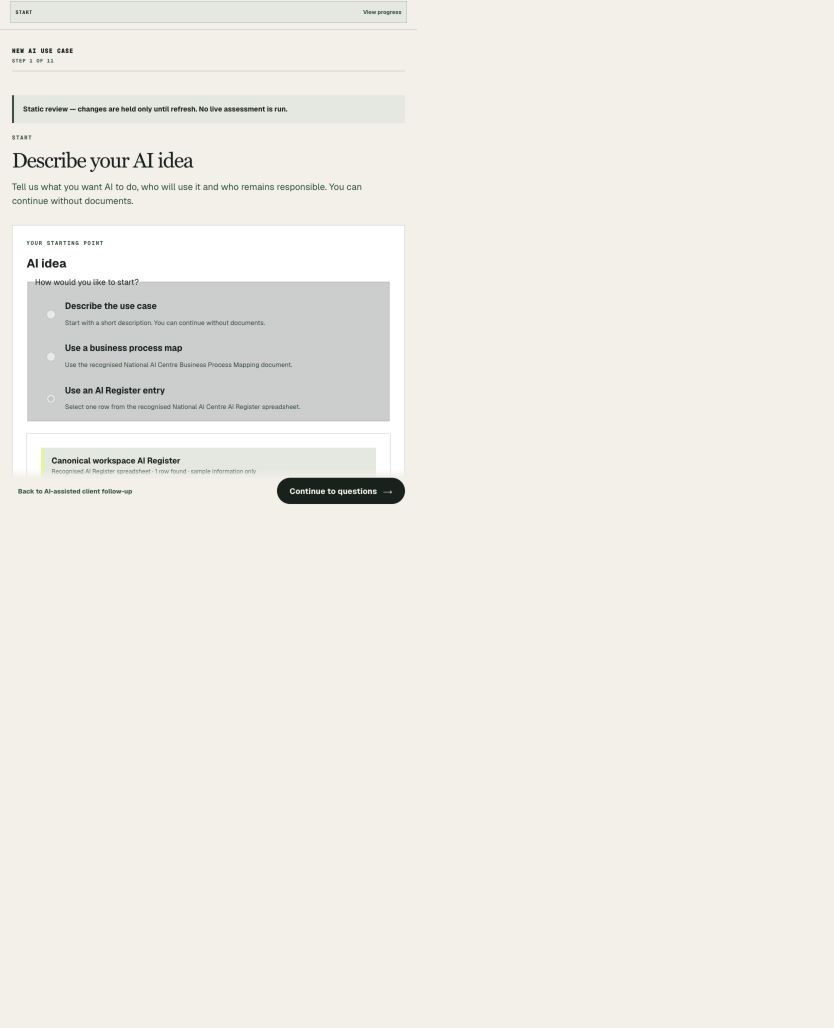
Maya starts from the main client follow-up record.
What the workspace records
Step 1 keeps its purpose, limits and owner.
Notice
The assessment does not create a competing AI use case.
Why it matters
The result returns to the same shared record.
Moment 2
What the person does
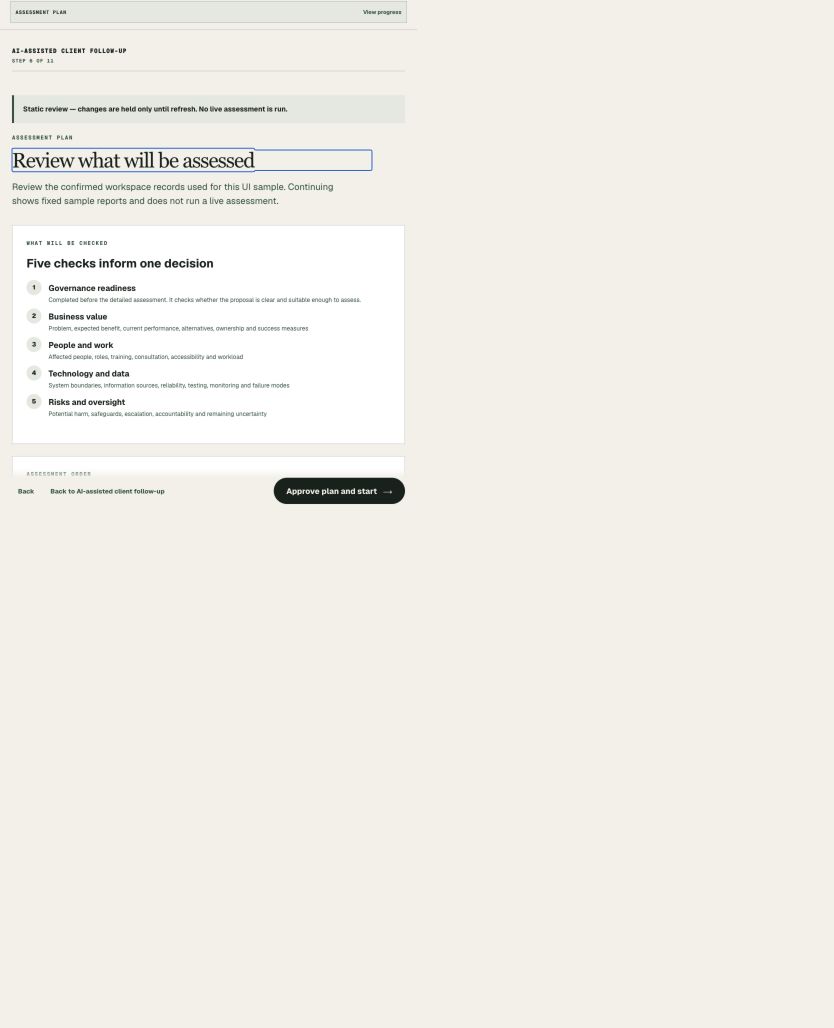
Maya reviews linked policy, screening, activities and evidence.
What the workspace records
Step 6 records what is included and why anything is left out.
Notice
Available does not mean reliable or relevant.
Why it matters
Readers can see what informed the assessment.
Moment 3
What the person does
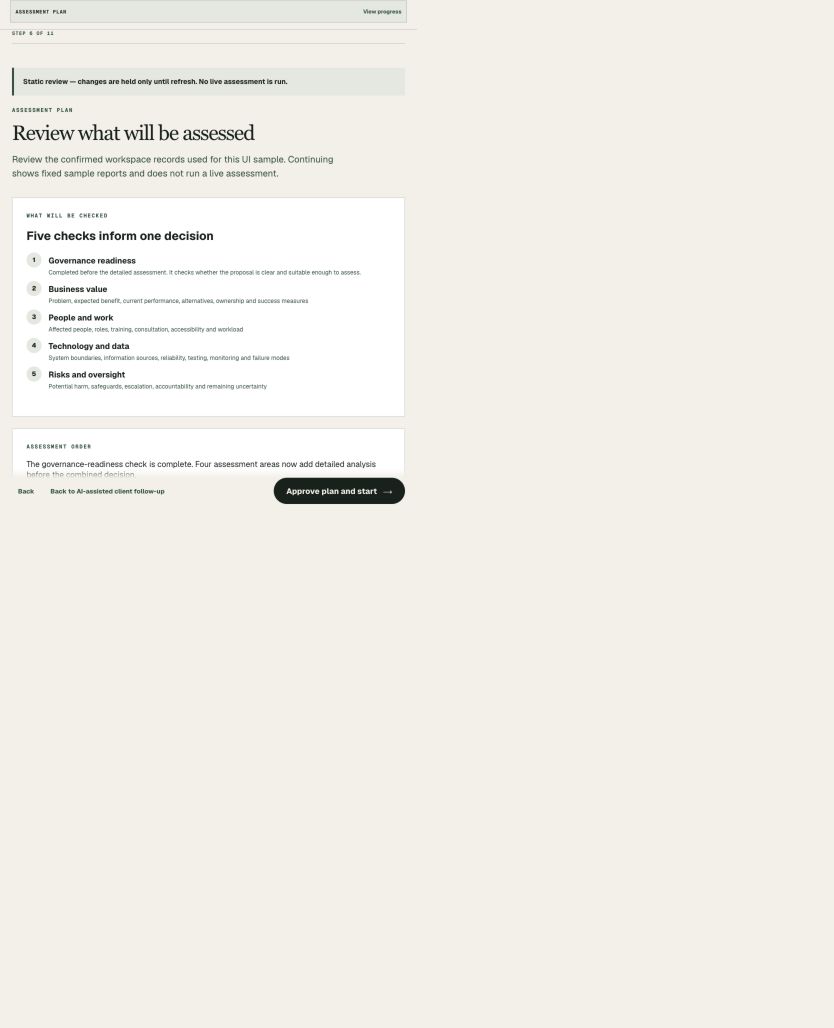
Reviewers examine Business, People, Technology and data, and Risks and oversight.
What the workspace records
Each report keeps findings, actions, evidence gaps and limitations.
Notice
The sample results are fixed worked-example content, not a live calculation.
Why it matters
Important differences do not disappear into one score.
Moment 4
What the person does
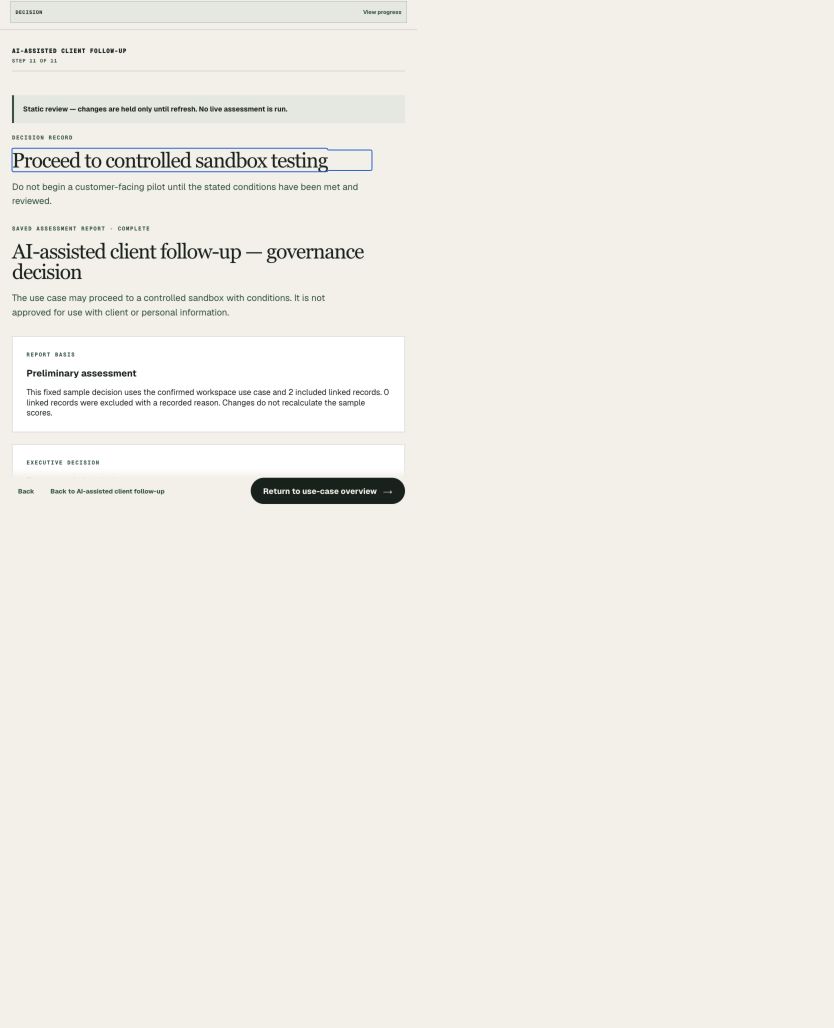
Maya records the reasons and uncertainty for the accountable decision-maker to review.
What the workspace records
Step 11 creates a proposed decision, conditions, action owners and the next review trigger.
Notice
The proposal does not approve testing.
Why it matters
The result shows the accountable person what must be decided and followed up.
Official guidance used in this lesson
National AI Centre
Provides core actions for organisations beginning responsible AI governance.
Last checked 30 September 2026
National AI Centre
Provides operational detail for more established governance work.
Last checked 30 September 2026
The complication
The human-review safeguard is appropriate but remains unproven in realistic conditions.
The outcome
The assessment returns a proposed limited test using agreed sample data, people and stop rules, with clear conditions and owners. The decision remains unapproved.
Check your understanding
They answer different questions. Keeping them separate preserves findings, gaps and limitations before the accountable person makes one combined decision.
Key points
What happens next