
The situation
The proposed assistant changes how accountants prepare and review client communications.
Lesson 7 of 12 · 7-minute lesson
Turn capability, communication and oversight gaps into owned actions.
For: Team leaders, workers and change owners
This lesson uses National AI Centre guidance: Activities for teams, Team readiness canvas.
The situation
The proposed assistant changes how accountants prepare and review client communications.
The problem
A technical test can look successful while staff lack training, authority or a safe way to raise concerns.
The choice
Daniel chooses the Team Readiness Canvas and runs it with the people affected.
What you will learn
The complete set
Agree safe ways to discuss and report AI use.
Surface worker experience and concerns.
Name uncertainty and choose a small next step.
Agree what better work should look like.
Identify knowledge and skill gaps.
Plan practical capability development.
Create shared actions and ownership.
Review readiness across six areas.
Practise a response to a changing situation.
The pivotal moments
Moment 1
What the person does
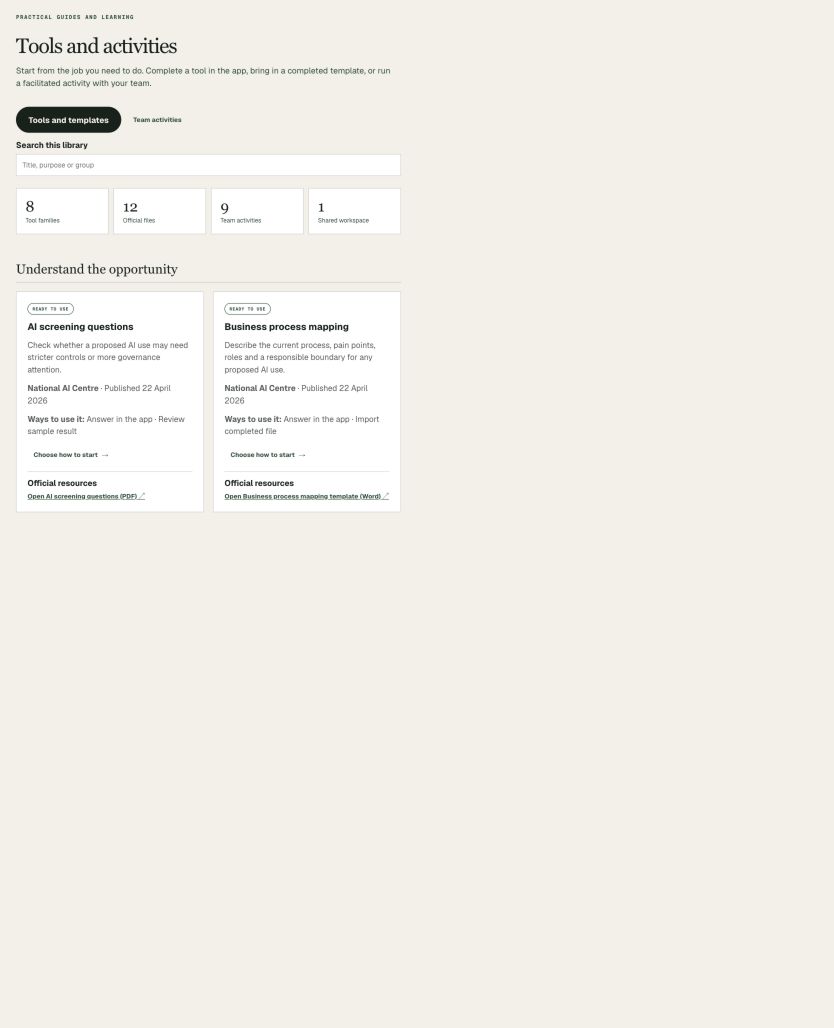
Daniel reviews all nine activities and their intended outcomes.
What the workspace records
The library keeps exact titles and descriptive official links.
Notice
Activities support different outcomes and are not interchangeable.
Why it matters
The team chooses a method that fits its question.
Moment 2
What the person does
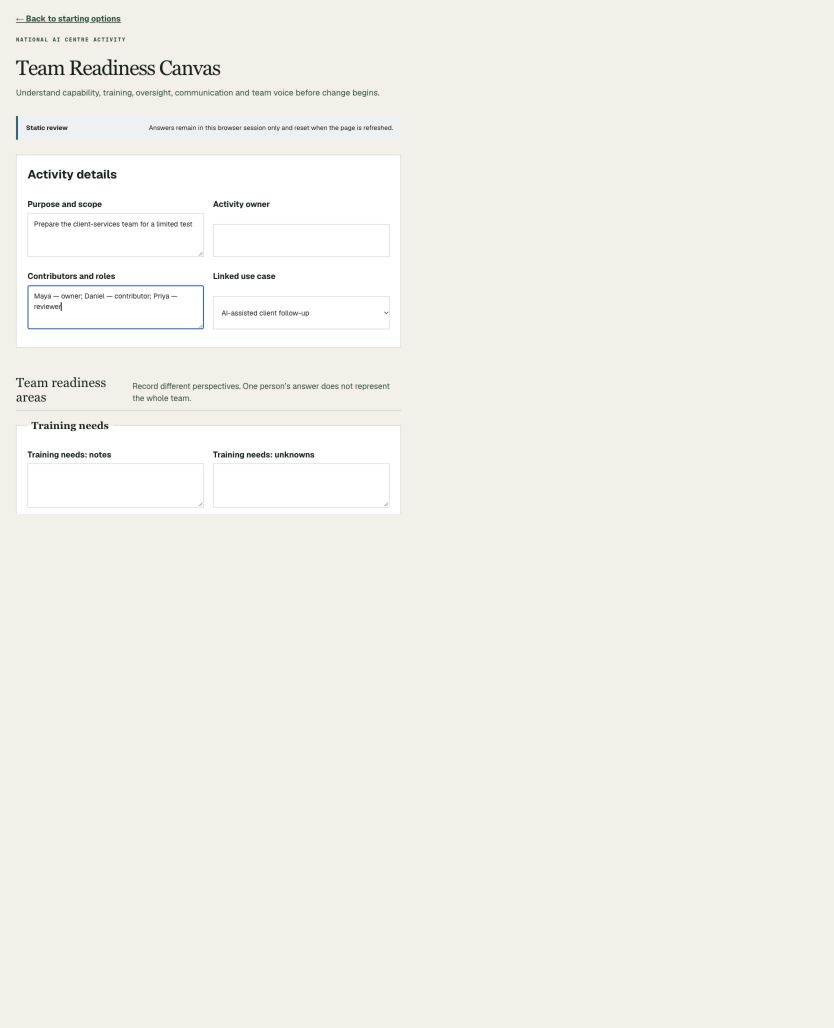
Daniel includes the owner, affected workers and oversight roles.
What the workspace records
The session records purpose, participants and facilitator.
Notice
Readiness is not decided by the project team alone.
Why it matters
People affected by the change can shape the plan.
Moment 3
What the person does
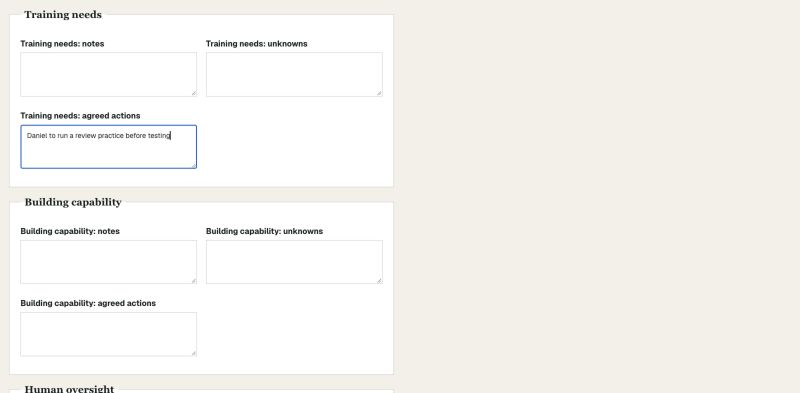
The team reviews six areas and chooses priority actions.
What the workspace records
Actions have owners and a revisit date.
Notice
Understanding the purpose does not prove staff can reject unsuitable drafts.
Why it matters
The workshop produces accountable follow-up.
Official guidance used in this lesson
National AI Centre
Lists the nine activities available to support different team outcomes.
Last checked 30 September 2026
National AI Centre
Provides the published canvas used for the readiness activity.
Last checked 30 September 2026
The complication
The team understands the intended use but has not practised rejecting or escalating an unsuitable draft.
The outcome
Readiness gaps become actions with owners and a date to revisit progress.
Check your understanding
They understand how work happens in practice and can identify capability, authority and support gaps that project teams may miss.
Key points
What happens next